wrist kept straight (not bent up / down and / or side-to-side)
3)
elbow anchored (well below hand height)
4)
shoulders - relaxed
5)
upper body / hips - Neutral Bow rotation
6)
legs / feet - Neutral Bow rotation
iii)
Point of Contact - side of hand
iv)
stance - Neutral Bow
b) proper formation - weapon (hand):
i)
hand - kept flat (not cupped)
ii)
thumb:
1)
pressed tightly against rest of hand (Compact Unit)
2)
bent at top knuckle
3)
not tucked forward onto palm
iii)
fingers:
1)
extended and relatively flat (muscle tension bend allowable on impact)
2)
kept together (Compact Unit)
c) execution:
i)
Method of Execution - Hammering
ii)
execute directly to target (prevent cocking)
iii)
improper execution:
1)
incorrect speeds / methods:
A)
executed too slow (transforms into push with side of hand)
B)
executed too fast (stance settle unable to keep up with strike)
C)
executed too tense (unable to achieve proper 'snap' of strike) (strike looks 'pushed' out)
D)
strike not tensed at Point of Contact (improper timing / never tensed)
2)
incorrect alignments / angles:
A)
elbow not properly anchored (always kept well below hand)
Form Specific
a) Common execution errors:
i)
cocking the hand back toward the shoulder area just prior to executing the strike in an attempt to gain extra Path of Travel and/or rotation for the strike
Comments
a) Common formation errors:
i)
allowing the thumb to be separated from the fingers
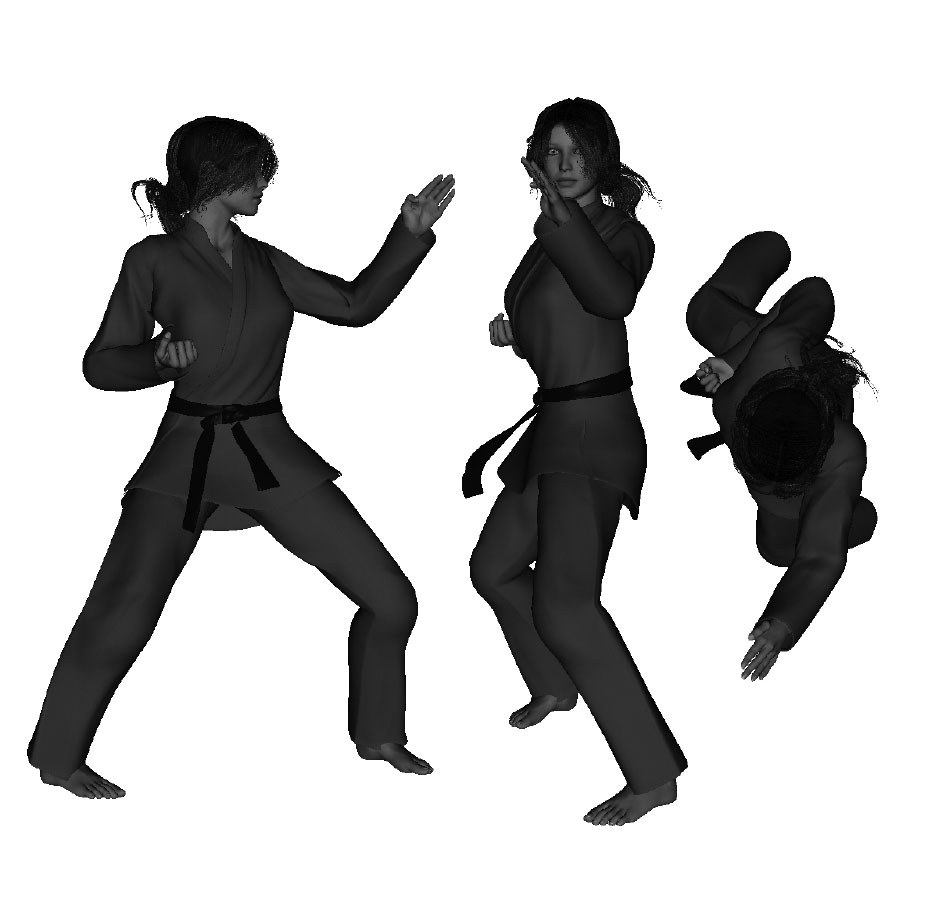
Example of a proper hand-sword (left)
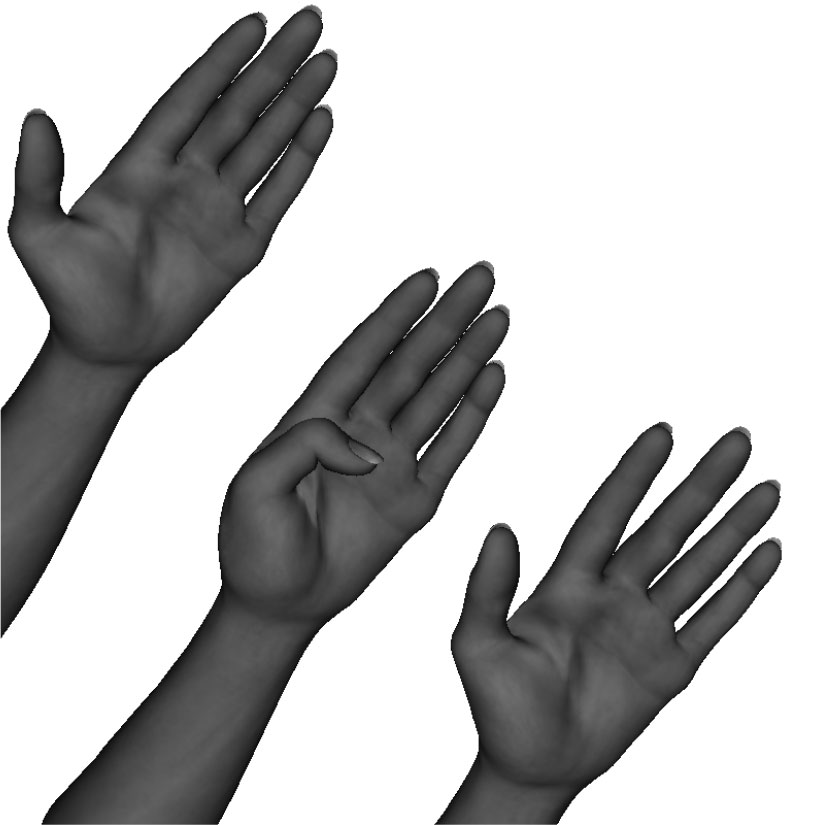
Example of proper hand-sword formation
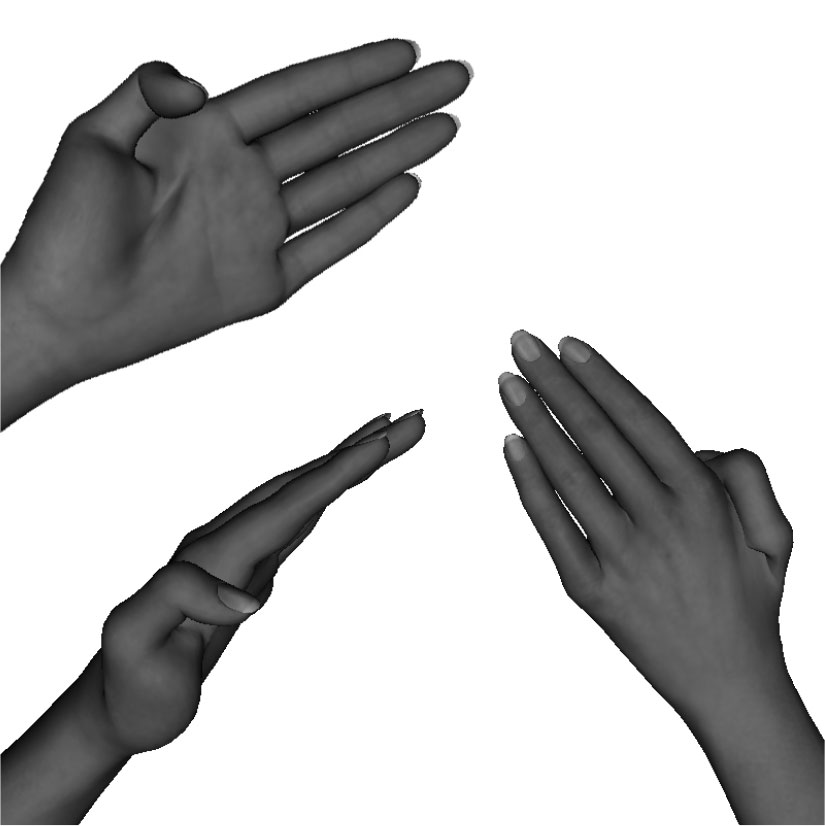
Example of improper hand-sword formation
thumb not tucked, thumb over tucked, fingers spread
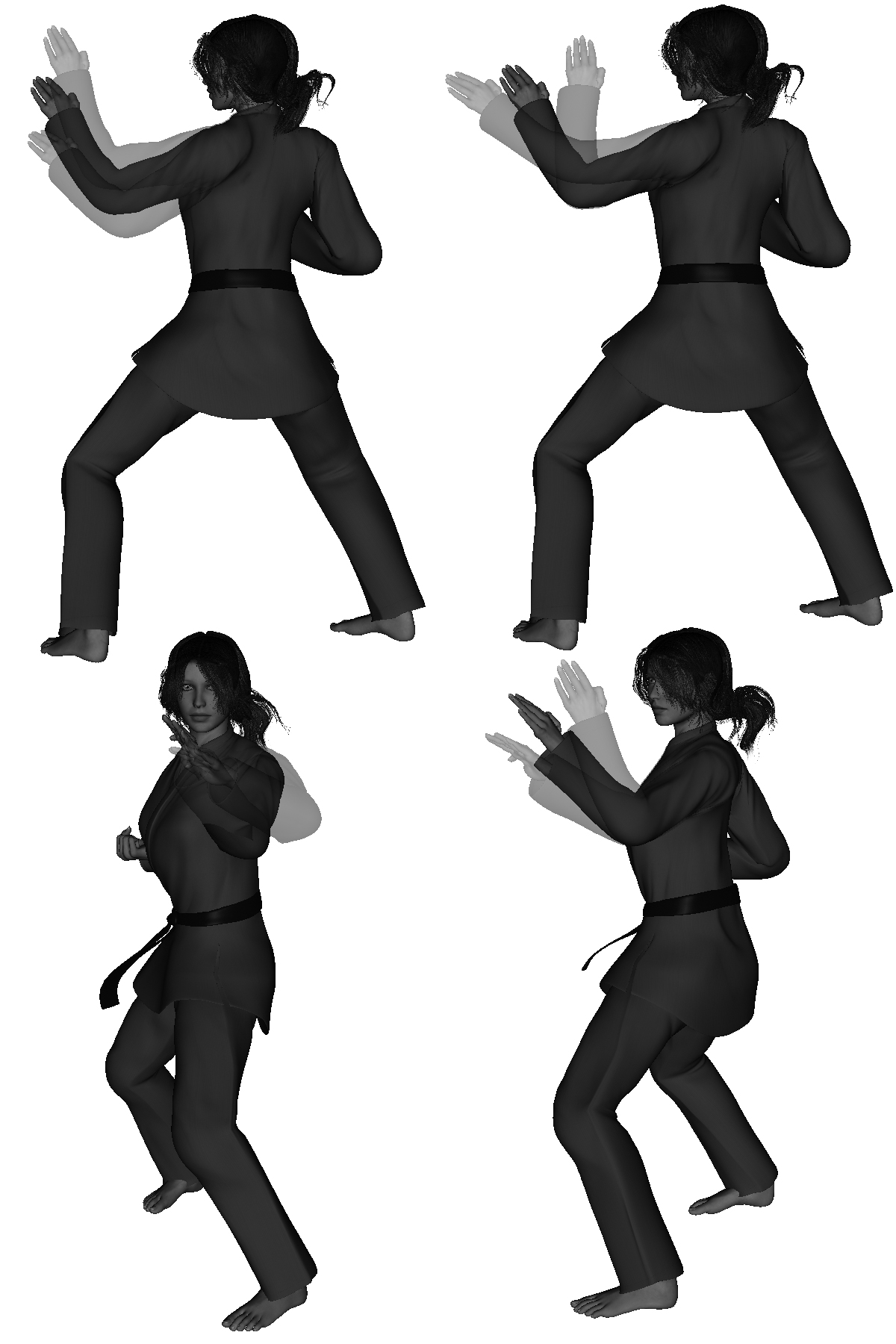
Examples of improper hand-sword execution
improper height - high / low, depth - close / far,
elbow out, rotation - over / under